Plenary
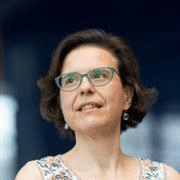
Professor Anna Korre, Imperial College
Anna Korre is Associate Provost – Sustainability, Professor of Environmental Engineering at Imperial College, and has been Co-Director of Energy Futures Lab, the College’s energy institute between Sept. 2018 and Aug. 2024. Anna also heads the Minerals Energy and Environmental Engineering Research Group, developing engineering solutions to the supply of clean energy, the sustainable production of natural resources, and mitigating environmental impacts and risks. Her research focus is in the areas of modelling risk and uncertainty and assessing the environmental and life cycle impacts of engineering systems. She has led several multi-million international and multidisciplinary projects funded by industry, UKRI, DESNZ/BEIS, The Crown Estate and EU developing engineering tools and carrying out environmental, ecological and human health studies to assess and minimise the impacts of the minerals and energy industries in terms of operational performance, environmental footprint and cost.atents have been filed on both Hg and CO2 adsorbents.

Professor Colin Snape, University of Nottingham
Prof. Colin Snape (FRSE) has been involved in fuel science and related disciplines for over 30 years having started working at the Coal Research Establishment (CRE) of British Coal (formally the National Coal Board) in 1974 and, as part of the liquefaction programme. In the early 1980s, his interests expanded to include the investigation of hydropyrolysis (hypy) as a route for direct coal liquefaction. After moving to the University of Strathclyde in 1987, an extensive research programme in fuel science encompassing his long-standing interests in coal characterisation, organic geochemistry and conversion, together with newer interests in cracking and hydroprocessing catalysis, petroleum residues, oil shale and biomass pyrolysis, sulfur speciation and polymer degradation was established. On moving in 2000, he was instrumental in establishing Nottingham as an internationally recognized centre for fossil energy, the multi-disciplinary research portfolio encompasses carbon technology, applied geochemistry and pollutant source apportionment as major themes. His current research programme encompasses novel adsorbents for CO2 capture both in combustion and gasification and developing high capacity Hg adsorbents while continuing the research on hypy linked to compound specific stable isotope measurements and source apportionment relevant to this proposal, together with investigating high pressure retardation effects on oil and gas generation. Patents have been filed on both Hg and CO2 adsorbents.
Keynote

Professor Aneta Magdziarz, AGH University of Krakow
Professor Aneta Magdziarz is a full professor at AGH University of Krakow in Poland in the scientific discipline of environmental engineering, mining, and energy. She is a Head of the Thermal Processes Research Group at AGH. Her scientific research focuses on the following areas: a) thermochemical conversion processes (pyrolysis, gasification) of biomass and municipal waste into value-added products within a circular economy and sustainable development; b) problems related to the transformation of mineral substances (corrosion, agglomeration); and c) promoting ecological awareness, environmental and climate protection.
She is the author and co-author of over 260 scientific publications, including 105 articles indexed on Web of Science, published in renowned scientific journals. During her scientific work, she has managed and participated in numerous international and national projects, e.g. EU Horizon 2020 MSCA, EU Horizon Europe, and National Science Centre, Poland, and ERA-NET. She participated in the initiative “Rising to the Top: Global Women Engineering Leaders Share their Journeys to Professional Success.”
Professor Magdziarz has established close cooperation with scientists from Poland and abroad, including Queen’s University of Belfast, Swansea University (UK); York University and Lakehead University in Canada; Xi’an Jiaotong University, Nanjing University of Science and Technology, and Huazhong University of Science and Technology in China; TU Bergakademie Freiberg in Germany; Technical University of Bucharest in Romania; and University College Dublin in Ireland and others. She actively participates in the most important national and international scientific conferences and undergoes scientific visits abroad. She is a Board Member of Polish Combustion Institute. For many years, she has been recognized as being in “The top 2% of the most cited scientists across the globe” based on the Stanford/Elsevier list.
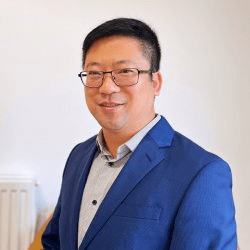
Dr Lei Xing, University of Surrey
Dr Lei Xing specialises in multi-physics modelling and multi-objective optimisation of circular economy systems in chemical engineering. His research focuses on the simulation and integration of chemical and electrochemical reactor processes, as well as data-driven modelling using machine learning, and AI-enabled techno-economic, sustainability analysis, and decision support. His work aims to advance net-zero carbon emissions in the future chemical industry. Dr Xing’s research bridges chemical engineering, energy systems, and data science, expanding the boundaries of traditional reactor modelling approaches. He has significantly accelerated the computation of large-scale complex models, offering innovative methodologies for system integration and dynamic optimisation. He has published over 130 research papers in areas of fuel cells, carbon capture, utilisation and storage (CCUS), and green energy, and holds five granted patents. His work has received more than 4,700 citations, with an h-index of 37. Dr Xing has led and participated in multiple UK and international research projects, including those funded by the EPSRC, EU Horizon, Royal Society, National Natural Science Foundation of China (NSFC), UGPN-RCF, and Daiwa Anglo-Japanese Foundation. Dr Xing is a Chartered Member and Registered Scientist of IChemE (Institution of Chemical Engineers, UK), a Senior Member of the International Association for Carbon Capture (IACC), Associate Editor of Fuel Cells and Frontiers in Energy Research, and an editorial board member of CCST, Energy and AI. He also serves as a guest editor for international journals such as Journal of Energy Storage and Energies.

Dr Yang Li, Dalian University of Technology
Dr. Yang LI is an associate professor in the School of Chemical Engineering at Dalian University of Technology, China. She received his Bachelor degree and PhD. of thermal engineering from Huazhong University of Science and Technology in 2004 and 2011, respectively. She spent two years at University of Utah and Secure and Clean Energy Institute, U.S.A, as a research assistant and visiting scholar. She then became an associated professor at the Dalian University of Technology. Mainly engaged in research related to the fundamentals and applications of coal and biomass conversion, the formation and integrated control of pollutants during coal utilization, and the thermal conversion of biomass and multi-source organic solid waste. As a PI of national key of research & development projects and natural science foundation projects, she has undertaken and participated in multiple research cooperating with institutions and enterprises.

Professor Jude Onwudili, Aston University
Jude Onwudili is a Professor of Sustainable Fuels and Chemicals in the department of Chemical Engineering and Biotechnologies at Aston University, Birmingham (UK) and a Fellow of the Royal Society of Chemistry. His research focuses on advanced thermo-catalytic conversion (e.g., pyrolysis, hydrothermal processing, and catalytic upgrading) of biomass, biomass-derived feedstocks and organic wastes to produce gaseous and liquid fuels, and organic chemical feedstocks. He leads the Sustainable Fuels and Chemicals Group and has also developed strong research interests in CO2 and biochar utilisation, process modelling and process development. In recent years, Onwudili has been involved in several multi-million pounds projects funded by the EPSRC, BBRSC, Innovate UK, EU, OFWAT and several industrial partners. Currently, he is a Co-Director of Aston’s Energy and Bioproducts Institute (EBRI) and Co-Director of the new ESPRC/BBRSC Funded NET2ZERO Centre for Doctoral Training (CDT) being hosted by Aston University with Warwick, Nottingham and Queen’s Belfast as academic partners. For both EBRI and the CDT, he leads on industrial research engagements.

Professor Cher Hon (Sam) Lau, The University of Edinburgh
Presentation title: Polymer membranes and Framework Materials for Zero-waste, zero-carbon carbon capture, nanofiltration and water treatment
Sam is a Professor in Circular Chemical Engineering at the School of Engineering, The University of Edinburgh. Sam’s background is in materials science, with particular focus on separation applications. He has been active in research on separation science since 2008. He is a graduate of Ngee Ann Polytechnic, Flinders University and The National University of Singapore in various courses ranging from Electronics and Computer Engineering to Nanotechnology to Chemical and Biomolecular Engineering. He has published more than 70 scientific research papers in journals such as Science, Nature Communications, Science Advances, Angewandte Chemie International Edition, PNAS etc. His research has been cited more than 6500 times, resulting in a h-index of 44. He is also an EPSRC Fellow working on the development of photo-responsive materials for zero-carbon, zero-waste resource recovery via desalination.

Dr Paul Iacomi, Surface Measurement Systems
Presentation title: TBC
Dr Paul IACOMI is the Head of Research and an UKRI Future Leaders Fellow at Surface Measurement Systems. He holds an EU-funded MSCA PhD in applied materials and nanoscience from Aix-Marseille University, France. His academic interests during his PhD and subsequent postdoctoral and industrial positions have been focused on the advanced characterisation of challenging novel porous materials, like defect-engineered or flexible metal organic frameworks (MOFs), alongside their integration for high-performance applications such as carbon capture, paraffin separation and sensors for satellites. At SMS, his team is leading the development of next generation of sorption methodologies, bringing together a wide range of expertise in sorption techniques and porous material/surface characterisation. His research output comprises over 30 peer reviewed publications, 1 patent and 1 book chapter.
 IACC2025